
A Practical Estate Cleanout Guide for Covington Families
Clearing a family home is rarely a logistics problem first. Here is a sequence that works, and how to set the container up so it fits around the family rather than against it.
In this guide
- Start with the paperwork, not the furniture
- A sorting order that works
- Setting the container up correctly
- Sizing a house clearance
- The garage, the shed and the attic
- Things worth checking before they go
- Working with executors and agents
- Giving yourself enough time
We deliver a lot of containers for estate clearances, and the jobs that go well have very little to do with how efficiently anybody works. They go well because the family gave themselves enough time and did the steps in a sensible order.
Start with the paperwork, not the furniture
Before anything physical happens, establish who has authority to dispose of the contents. If the estate is going through probate, the executor or administrator holds that authority, and clearing a property before it is settled can create genuine problems between family members and occasionally with the court.
Locate the will, the deed, insurance policies and any inventory that exists. Check whether specific items were left to specific people — the number of clearances that stop halfway through because somebody remembers a bequest is higher than you would think.
If the property is being sold, get the closing date early and work backwards from it. That single date determines the shape of the entire project.
A sorting order that works
The instinct is to start at the front door and work through. That is the slowest possible approach, because the first rooms are the ones with the most emotional weight and the most decisions per square foot.
A better sequence:
First, the obvious keep. Walk the whole house and remove anything that is definitely going to a family member. Get it out of the building. Everything remaining is now a decision rather than a maybe.
Second, documents and valuables. Financial records, photographs, jewellery, anything with a serial number. This is a slow, careful pass and it should be done before anything is thrown away.
Third, the obvious discard. Broken furniture, worn mattresses, expired food, damaged goods, accumulated packaging. This is where the container earns its keep and where you will see the fastest visible progress, which matters more for morale than people admit.
Fourth, donation and sale. Furniture in good condition, appliances, books, clothing. Local charities will often collect, and estate sale companies will look at a whole-house contents where the volume justifies it.
Last, the difficult middle. The things nobody wants but nobody can quite discard. Leave these until the end when the house is emptier and decisions come more easily.
Setting the container up correctly
A standard seven-day rental is the wrong shape for this work. Families need to sort, and sorting rushed is sorting badly — people throw away things they later wish they had not.
We set estate cleanouts up on a daily rate from the beginning, typically two to four weeks. The rate is agreed at the start so there is nothing unexpected on the invoice, and nobody from our office will ring to chase the container. That last point matters. A phone call asking when you will be finished is the last thing anybody needs during a month like this.
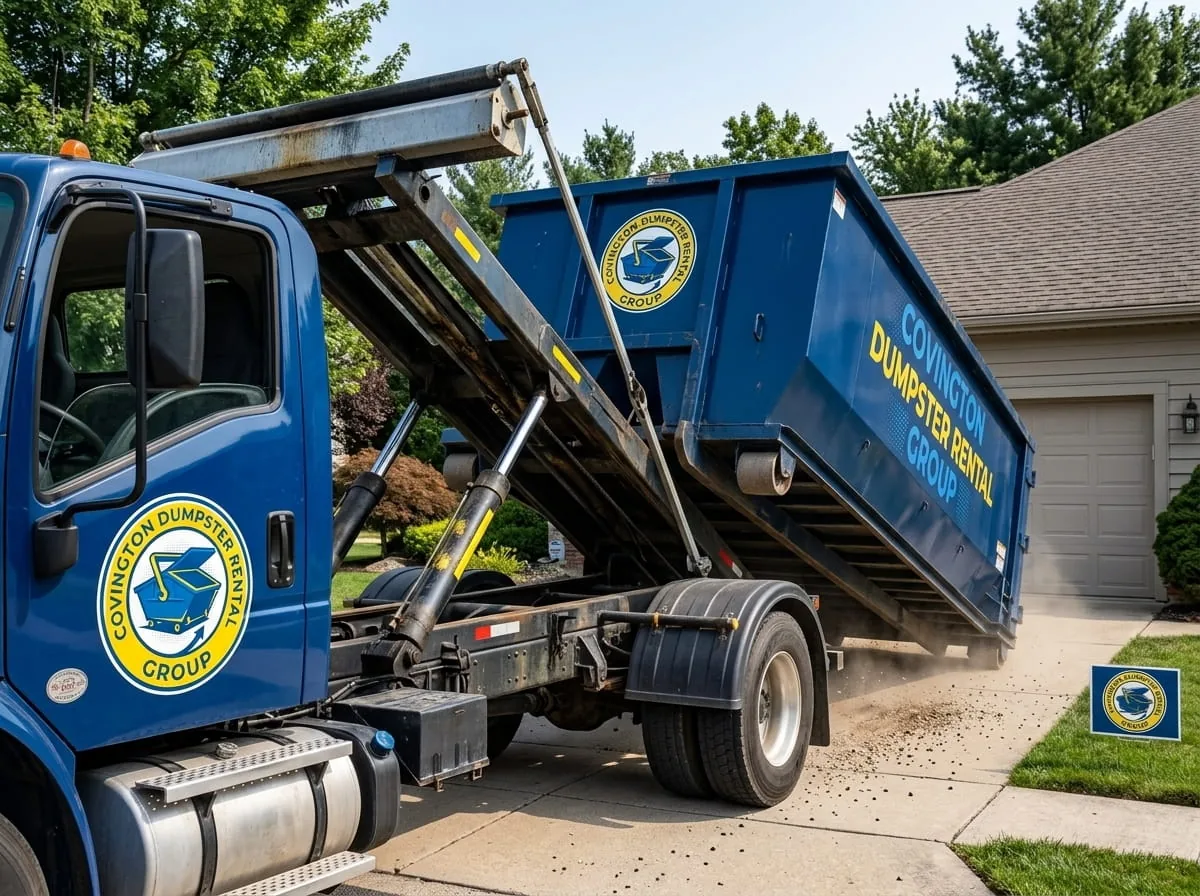
Placement is worth thinking about too. A container in a driveway announces to a whole street that something has happened. If the family would rather it were less conspicuous, tell us and we will place it as discreetly as the site allows — behind the house, to the side, wherever works.
Sizing a house clearance
Household contents are bulky rather than dense, which makes this one of the few jobs where the larger container is usually correct.
A fully furnished three-bedroom house typically fills a 30 yard, sometimes with room to spare. A smaller property or a partial clearance may fit a 20. A large house with outbuildings will need more than one container or a swap.
The exceptions are worth flagging. If the clearance includes carpet coming up, tile being removed, or a garage full of stored building material, the weight climbs quickly and a 20 yard swapped can work out better than a single 30. Tell us what is in the garage when you call, because that is usually the deciding factor.
Hoarding situations are a different category entirely and we will come and look rather than guess over the phone. Getting the size wrong on that kind of job wastes everybody's time and money.
The garage, the shed and the attic
These three spaces produce most of the surprises, and they are where the prohibited items live.
Older Newton County properties — and this is particularly true out toward Mansfield, Newborn, Jersey and the rural areas — will have a shed or garage that has accumulated forty years of paint tins, motor oil, fuel cans, garden chemicals, batteries, propane cylinders and tyres. None of that can go in a container.
Walk those spaces in the first week, not the last. Make a list. Paint, solvents and electronics go to the county's monthly household collection, held on the first Saturday. Tyres go to the landfill at a per-item charge. Car batteries go back to an auto parts retailer. Refrigerant appliances need a contractor to recover the gas before the shell can be disposed of.
Discovering twenty tyres and six drums of unknown liquid on the final afternoon is how a clearance overruns.
Things worth checking before they go
We have had containers stopped on the day of collection because something turned up. A few things worth a second look:
- Books. Check for anything tucked inside. Cash, documents and photographs live in books more often than in filing cabinets.
- Furniture with drawers. Pull every one right out. Things fall behind them and stay there for decades.
- Pockets and linings. Coats and jackets, particularly older ones.
- Picture frames. People store documents behind photographs.
- Freezers and appliances. More common than it sounds.
- Military and service items. Medals, discharge papers and similar carry real family significance and are easy to miss in a box of paperwork.
If the container is loaded and you realise something may be in there, ring us before the scheduled pickup. Once it goes across the scale it is gone.
Working with executors and agents
We invoice executors, estate attorneys and property managers directly where that is simpler than a family member paying and reclaiming later, and we can provide whatever documentation the estate accounts require.
Where an agent is coordinating a sale, we will liaise with them on access and timing rather than making the family relay messages. Tell us who is involved when you book and we will deal with them directly.
If multiple family members are coordinating, nominate one point of contact for us. Clearances where three people are all instructing separately are how containers end up in the wrong place on the wrong day.
Giving yourself enough time
The most common regret we hear is not about the size of the container or the cost. It is that the family gave themselves a fortnight for something that needed a month.
If there is a closing date, work backwards and add a week of margin. If there is not, take the time you need. The daily rate on an extended rental is a small cost compared with the alternative, which is a family sorting through a lifetime under time pressure and discarding things they cannot get back.
Take a photograph of each room before you start. People find that surprisingly valuable afterwards, and it costs nothing.
Book a container in Covington
One flat rate covering delivery, seven days, pickup and disposal.
(470) 327-9027Questions readers ask about this
How long can I keep a dumpster for an estate cleanout in Covington?
As long as the job needs. We set these up on a daily rate from the start and two to four weeks is entirely normal. Nobody will call to hurry you along.
What size dumpster for a full house clearance?
A 30 yard covers a typical fully furnished three-bedroom home. Tell us what is in the garage when you call, because stored building material or carpet coming up changes the answer toward a smaller container swapped instead.
Can the estate be invoiced directly?
Yes. We regularly invoice executors, estate attorneys and property managers, with documentation for the estate accounts as required.
What should come out of the garage before the container arrives?
Paint, solvents, motor oil, fuel, garden chemicals, batteries, propane cylinders, tyres and anything containing refrigerant. Newton County runs a residential paint and electronics collection on the first Saturday of each month, and tyres go to the landfill at a per-item charge.